The research behind every screen.
How people show their working style, how skills grow with practice and feedback, and how coaching changes behaviour at work. Here is what we used, and where it shows up in the app.
Your style from what you do, not what you claim
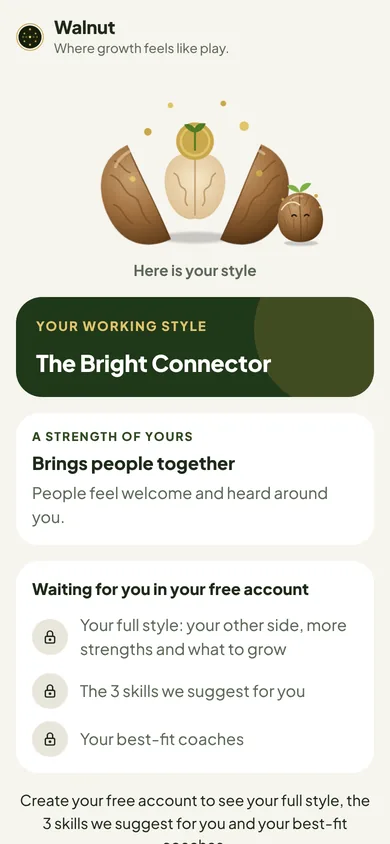
Coaching works better when coach and coachee fit. So the free 7-minute game reads two of the most validated models in psychology, DISC (how you communicate and respond under pressure) and the Big Five (OCEAN), from what you choose in short moments from a normal week, at work and at home, not from a survey about yourself.
The optional 14-day chapters go deeper, including the Enneagram.
The Big Five predict job performance across occupations. Barrick & Mount, 1991, Personnel Psychology.
Personality assessment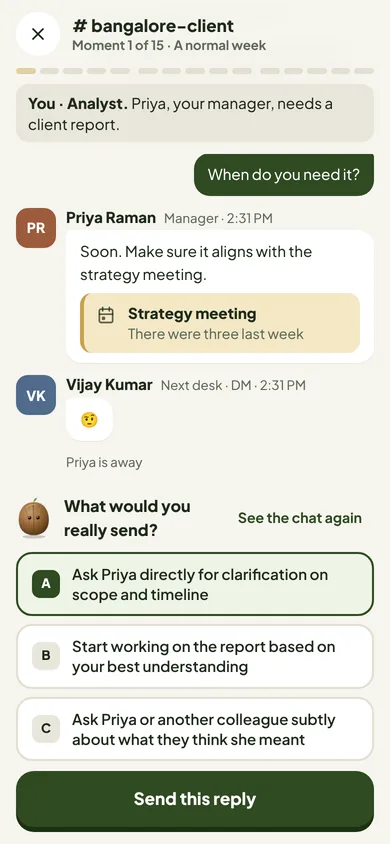
One skill at a time, in steps
21 skills in three levels: Foundation, Core and Advanced. You work on one skill at a time, in four steps: Starting point, Checkpoint, Mastery and Sign-off. Nothing is self-ticked: your coach signs off each skill after seeing the change across sessions. Then you pick the next one together.
Skills grow through deliberate practice with feedback. Ericsson, Krampe & Tesch-Römer, 1993, Psychological Review.
The skill path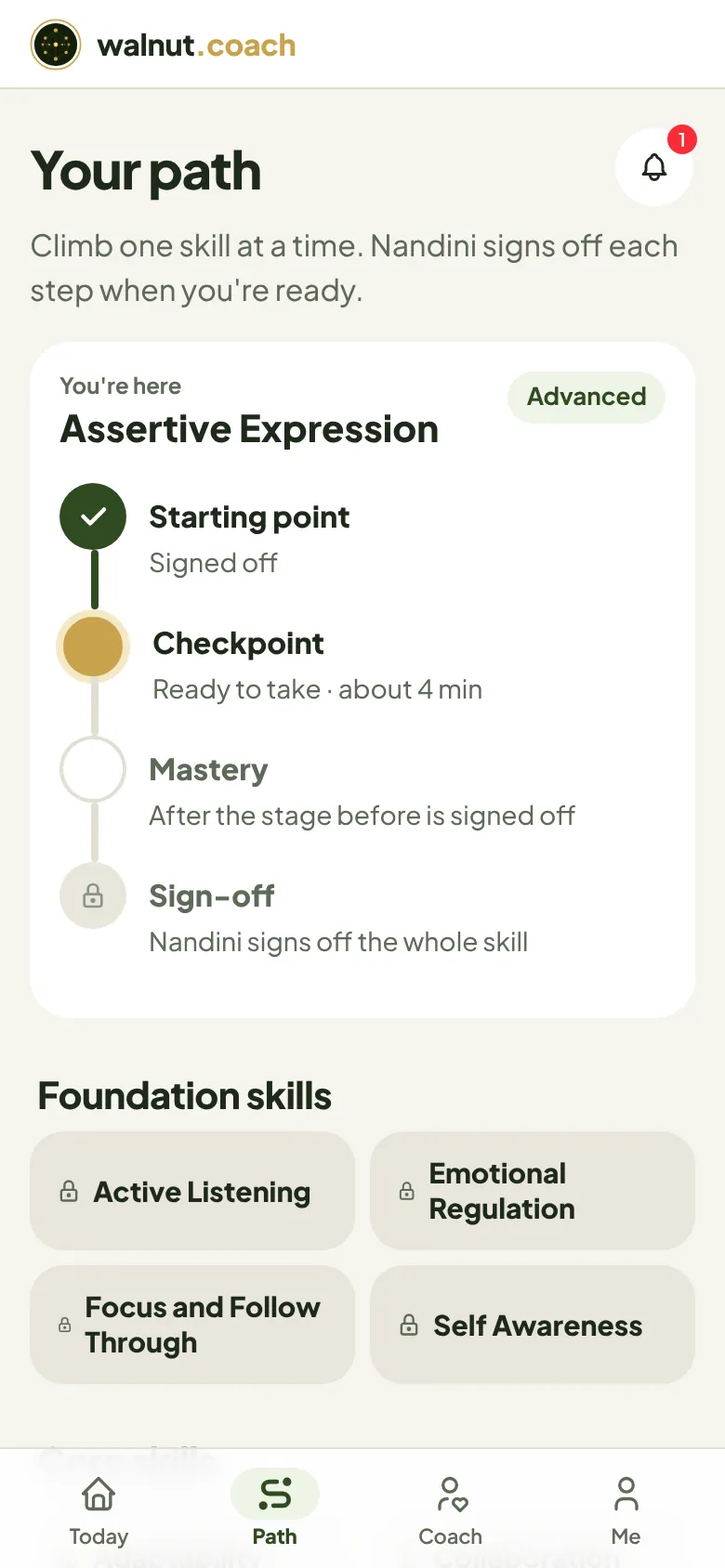
A 2-minute check after every session
Three quick work moments on the skill you just worked on. Recalling what you practised is what makes it stick, and your coach reads the result before you meet again, so no session starts cold.
Testing yourself beats re-reading for long-term memory. Roediger & Karpicke, 2006, Psychological Science.
Progress measurement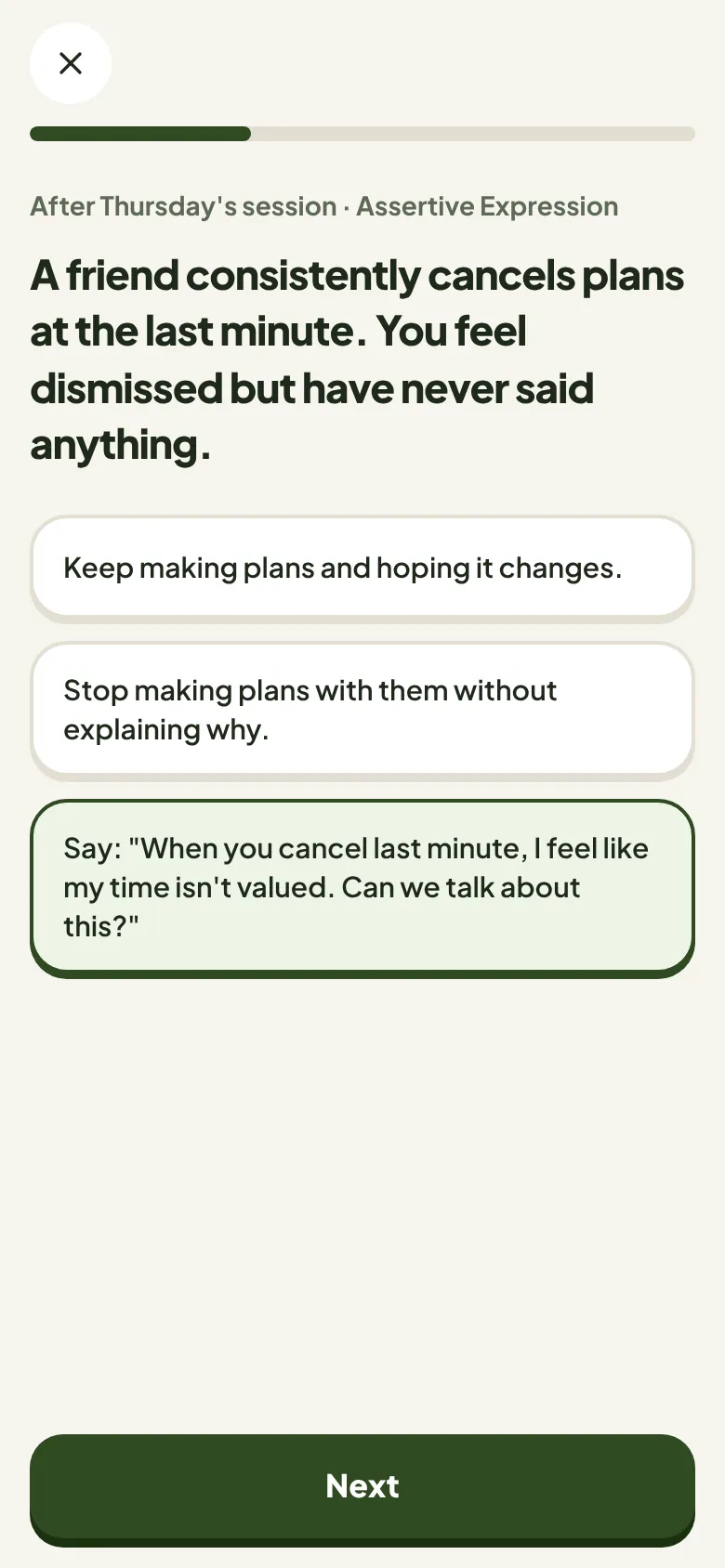
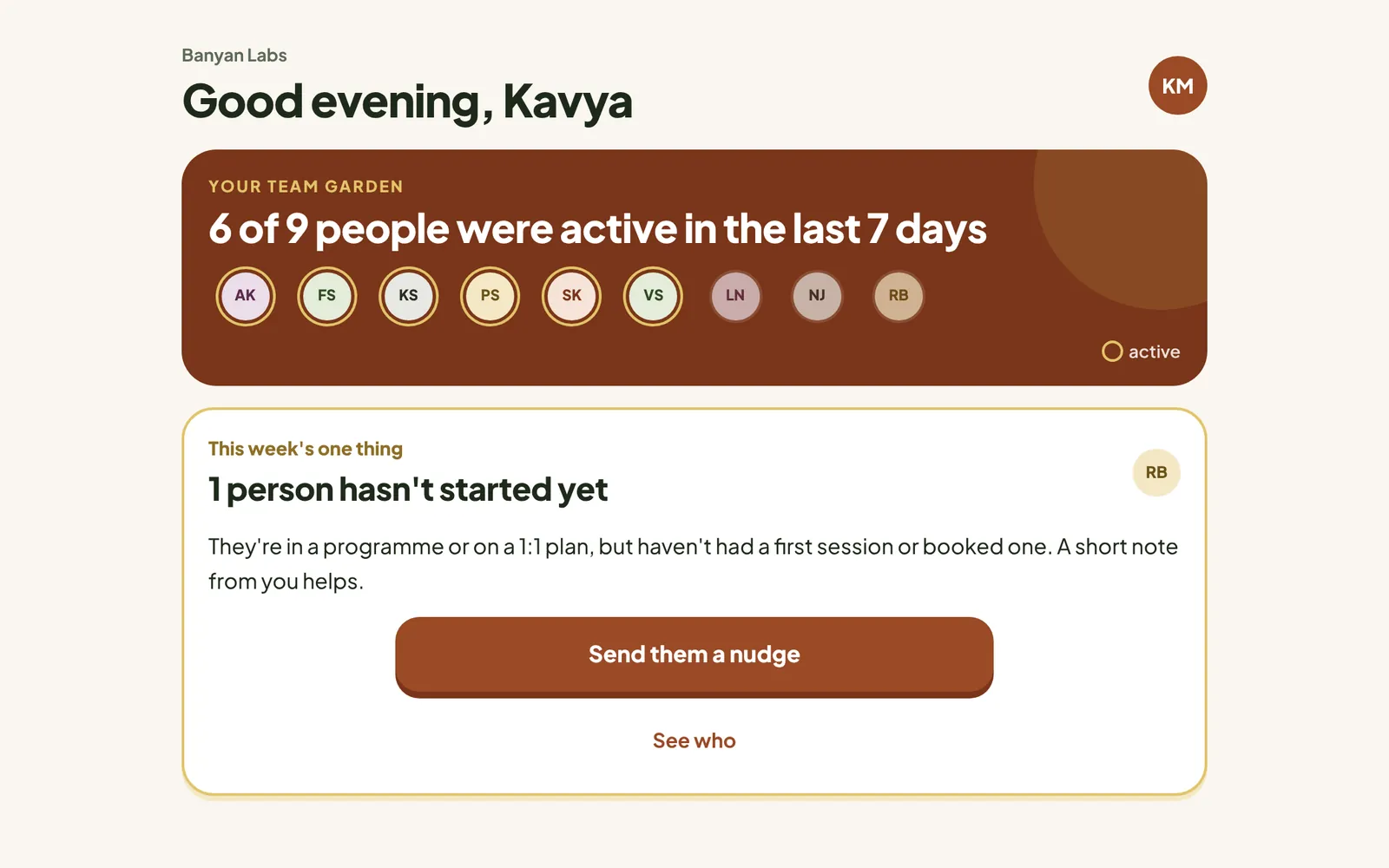
Progress HR can see
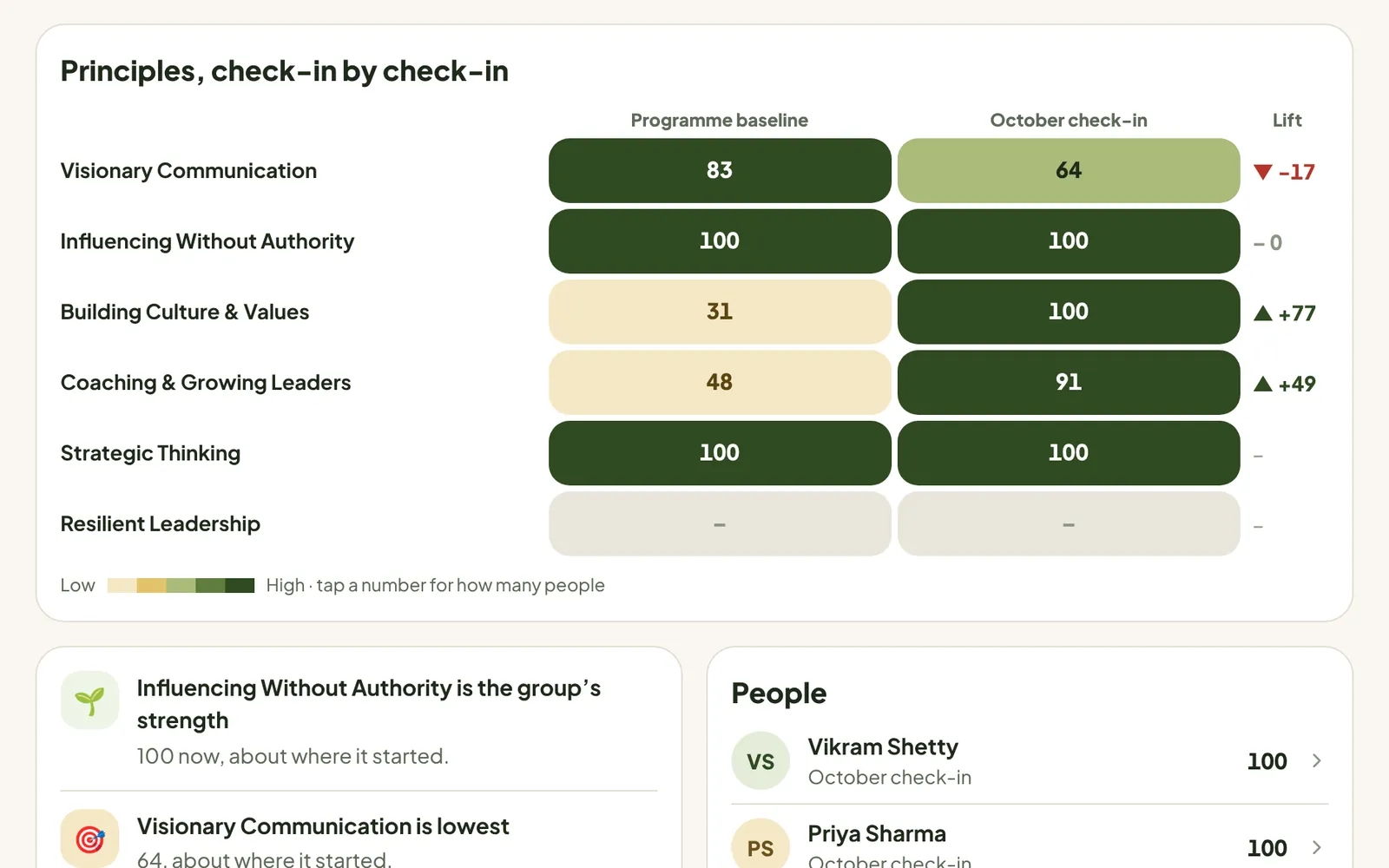
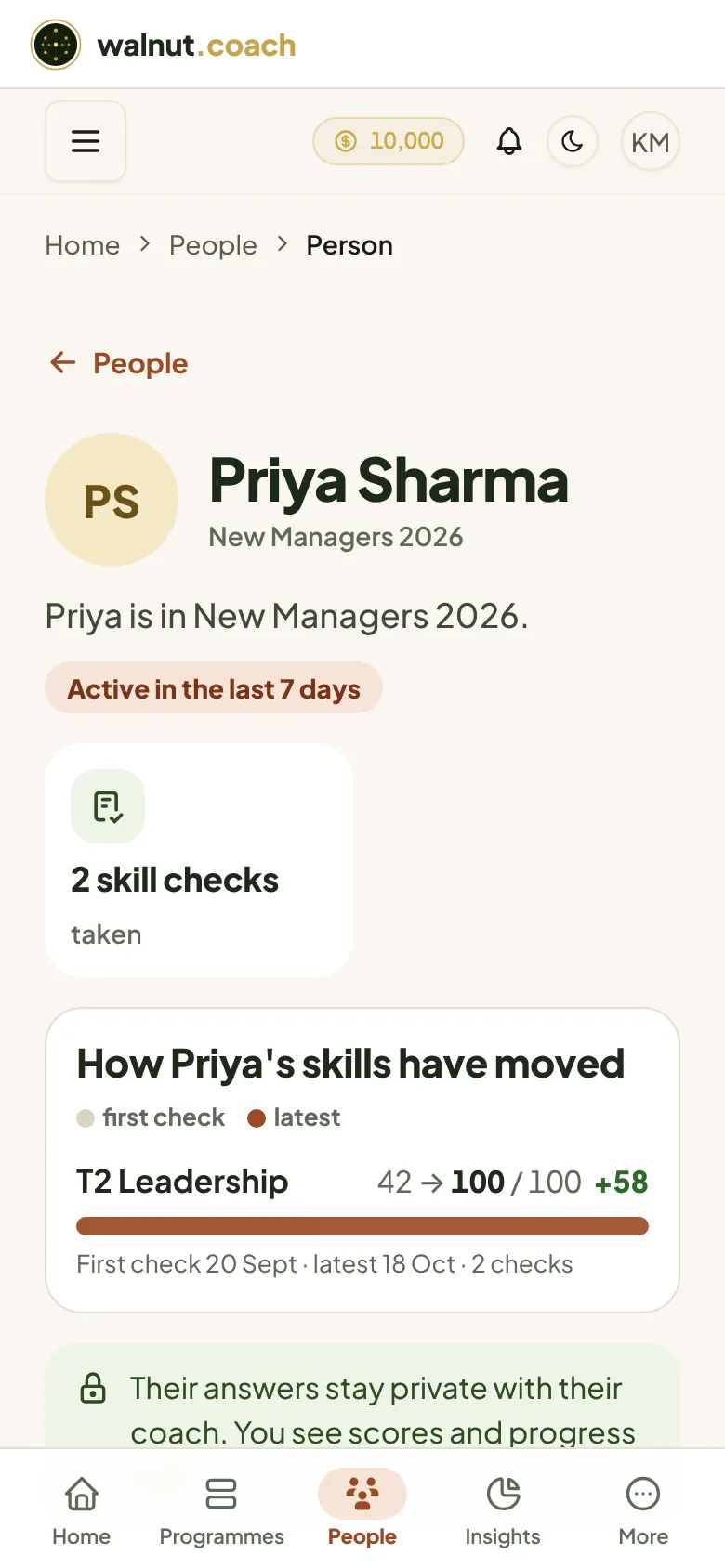
Who was active this week, the one thing to do next, and each skill from the first check to the latest, always with how many people (n). A monthly report to download and share. That covers the first three of Kirkpatrick's four levels (reaction, learning, behaviour) and gives HR the numbers to set against business results.
What was missing from traditional coaching
Coaches and coachees met, and then nothing. No data, no skill evidence, no way for HR to see it worked. We studied how people change and how skills stick, and built each piece of Walnut on that research.
No data between sessions
Growth only happened in the room. Everything between sessions was invisible.No measurable outcomes
Organisations had to take it on faith. HR couldn't show what changed.Low engagement
Most coaching tools felt like admin. Nothing was designed to be enjoyed.Random coach matching
Fit was luck of the draw. The wrong match wasted months of time and budget.
40+ ICF-credentialed coaches
Every Walnut coach holds an ICF credential: verified practice hours, an independent exam and the ICF Code of Ethics. We check it before a coach joins.
- ACC
Associate Certified Coach
100+ coaching hours, ICF-approved training and an exam. Our Manager coaching coaches.
- PCC
Professional Certified Coach
500+ coaching hours and an advanced competency assessment. Our Leadership coaching coaches.
- MCC
Master Certified Coach
2,500+ coaching hours: the ICF's highest credential. Our Executive coaching coaches.
Read the research
- What is coaching?How coaching differs from therapy, mentoring and consulting.Read
- Personality assessmentDISC and the Big Five, read from what you choose.Read
- The skill path21 skills in Foundation, Core and Advanced, one at a time.Read
- Games and simulationsWhy short work scenarios beat long questionnaires.Read
- ICF credentialsWhat ACC, PCC and MCC mean, and why they matter.Read
- Progress measurementBaseline, a check after every session, and coach sign-off.Read
- ROI of coachingThe published research on what coaching returns.Read
Questions we get asked
How does coach matching work?
What if I don't connect with my coach?
Are all your coaches ICF-credentialed?
What's the difference between plans?
How do company programmes differ from individual coaching?
How quickly can a company programme launch?
What languages are sessions in?
Try the research on yourself.
Play the free 7-minute game, or book a demo and we'll show you the app with sample data.